
The ancient practice of meditation
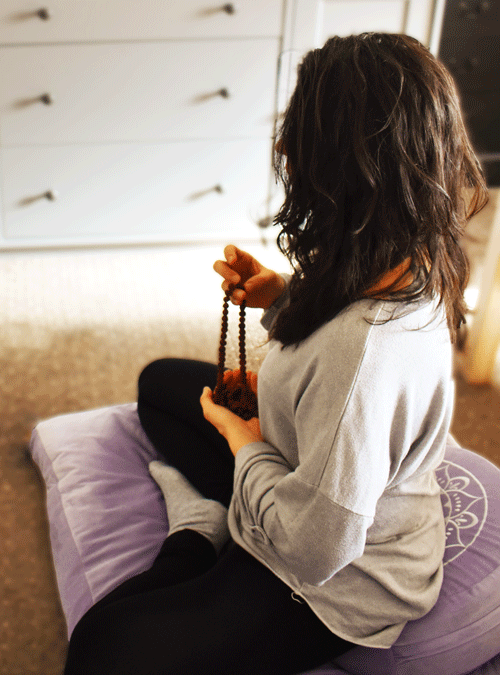
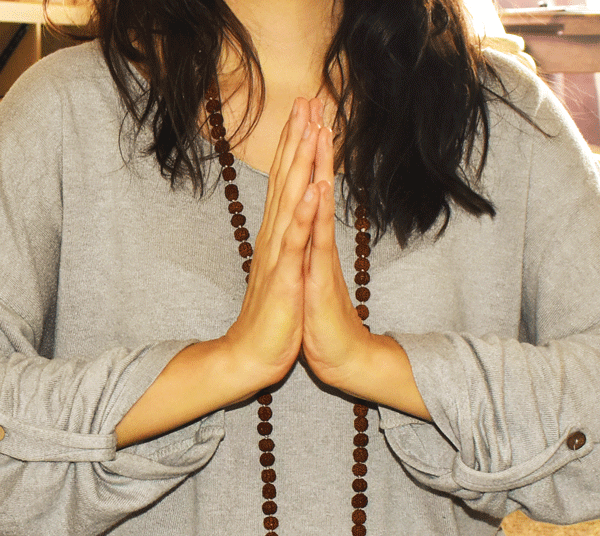
Meditation is an ancient practice of returning to yourself — to that quiet inner space where healing naturally unfolds. It begins with the breath: by bringing gentle awareness to your breathing, you can access deep relaxation and presence.
Meditation is a practice, not a performance. There is no right or wrong way to do it — only the willingness to sit with yourself and observe with compassion. It is not about silencing the mind or blanking out; it is about noticing your thoughts without judgment and learning to consciously release them and replace them.
Through regular practice, meditation can help you connect with your intuition and the creative power within. It can be a doorway to divine energy, Universal Consciousness, or a sense of higher guidance. Even without spiritual beliefs, meditation offers tangible benefits: calming the mind, enhancing clarity, and activating your innate intuitive intelligence.
"Meditation is not about making the mind go quiet. It's a way of entering into the quiet that's already there" Deepak Chopra
"By the practice of meditation, you will find that you are carrying within your heart a portable paradise" Paramahamsa Yogananda
It all begins with breath
"Breath control is self-control. Breath mastery is self-mastery. Breathless state is deathless state" Paramahamsa Hariharananda
Breath is the foundation of every meditation practice, across all traditions. Whether we consciously guide it or simply rest our awareness upon it, the breath remains the central anchor of the meditative experience. In Christianity, indian tradition, chinese and native american ancient wisdom and many other spiritual traditions, it is considered the essence of life itself—prāṇa, the life force; the divine breath that animates the human being. Without breath, life cannot continue. Across these diverse traditions, breath is more than a physiological necessity—it is a bridge between body and spirit. Honoring this fundamental rhythm is a powerful act of gratitude, and it is through this simple yet profound awareness that we begin to truly reconnect with our bodies.
Breath is also a two-way communication system between body and mind. When we feel fear, anger, or stress, our breathing instantly shifts—becoming faster, shallower, or more irregular. This is the body’s natural response to perceived threat. Yet the communication works in the opposite direction as well: by consciously changing our breath, we can send powerful signals back to the brain that we are safe.
Engaging in slow, full diaphragmatic breathing activates the vagus nerve, a key component of the parasympathetic nervous system. This stimulation helps regulate heart rate, reduce the release of stress hormones, and promote a state of calm. In this way, mindful breathing becomes an immediate and accessible tool for restoring balance, grounding the nervous system, and supporting emotional well-being.
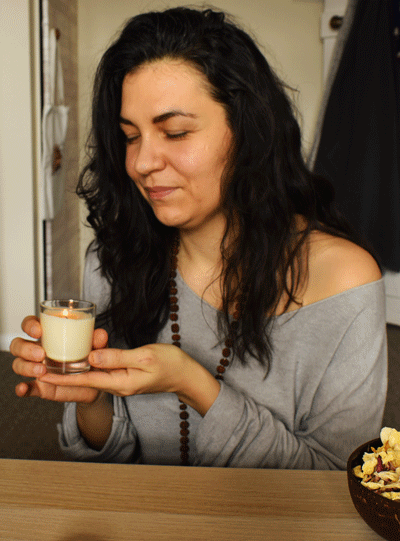
"Meditation is being mindful of the inner world; mindfulness is meditating on the outside world" Graham Nicholls
Mindfulness vs Meditation
Mindfulness and meditation are closely related, but they are not the same.
Mindfulness is the quality of paying steady, open, non-judgmental attention to the present moment. It can be practiced anywhere—while walking, eating, working, or talking—simply by noticing what is happening within and around you.
Meditation, on the other hand, is a dedicated practice that trains the mind. It usually involves setting aside time to sit or lie down, focusing on an anchor such as the breath, a mantra, or a visualization. Meditation develops skills like concentration, emotional balance, compassion, and, of course, mindfulness itself.
In essence:
Mindfulness is a state of awareness you can bring into any moment.
Meditation is the formal practice that helps cultivate and strengthen that awareness.
Together, they support clarity, presence, and a deeper connection to everyday life.
"I believe in intuition and inspiration. Imagination is more important than knowledge. For knowledge is limited, whereas imagination embraces the entire world, stimulating progress, giving birth to evolution. It is, strictly speaking, a real factor in scientific research."Albert Einstein
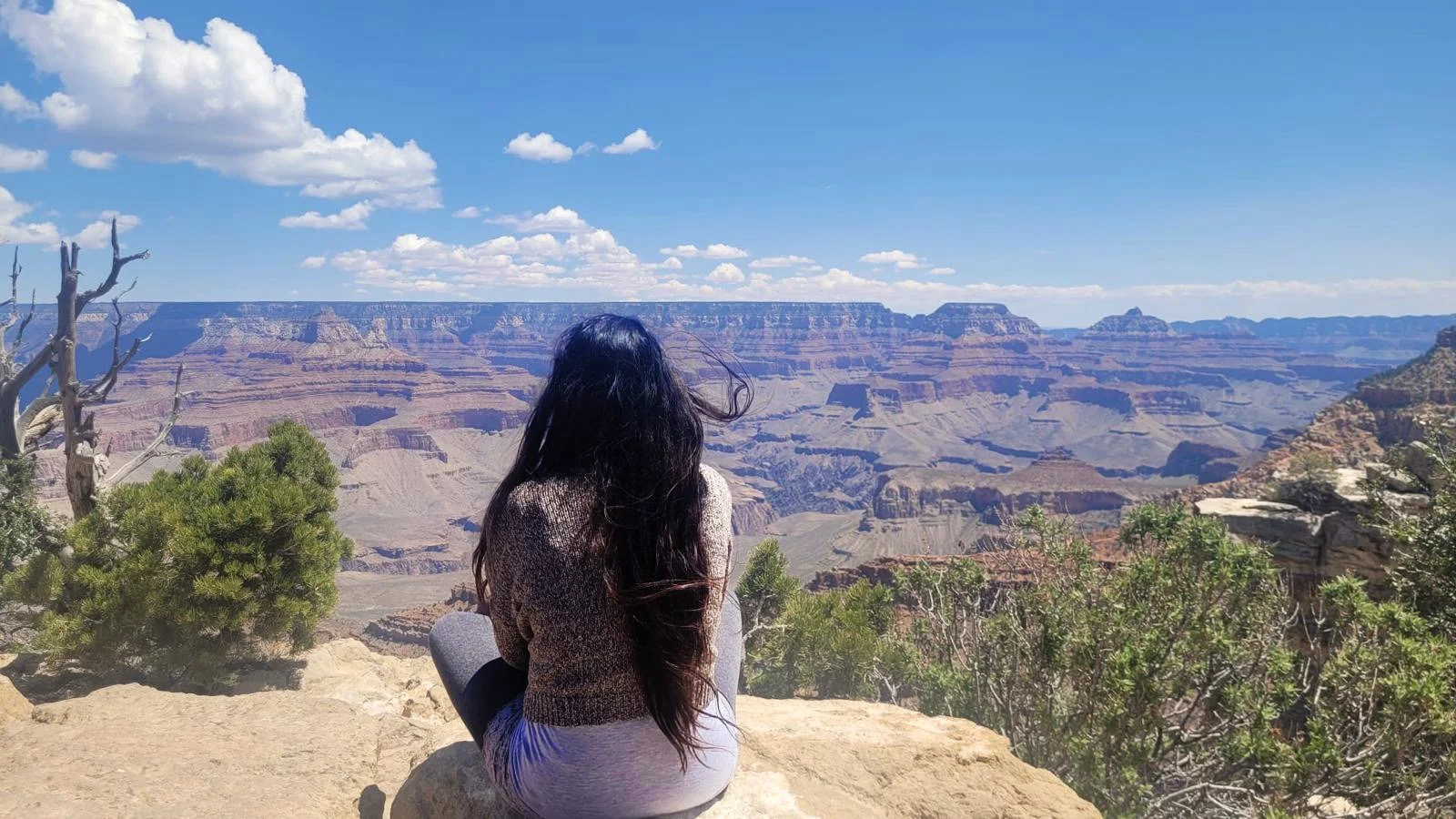
"Superior to the senses is the mind; superior to the mind is the understanding; superior to the understanding is He. Therefore know Him who is superior to the understanding, control the self by the Self, and destroy, o mighty Arjuna, the enemy, who comes in the guise of desire and is hard to overcome" Bhagavad Gita, chapter 3, 42-43
My experience
I first encountered mindfulness in 2018, at the end of my PhD. As any scientist, I was living completely in my head, and mindfulness helped me reconnect with life — not just through thought, but through my senses and presence in the world.
In 2019, when COVID hit, I was living alone in New York City. The great loneliness I experienced, prompted me to deepen my practice. I began with guided meditations and, drawn by my imagination, soon started recording my own, finding this even more powerful.
By 2022, during a period of severe burnout, I committed fully to the practice. I began a consistent hatha yoga routine, which was transformative for connecting body, mind, and spirit (for anyone interested, I highly recommend Planetary Health Yoga led by Federica Lari, another spiritual scientist). Alongside this, I explored chakras, practiced vipassana and visualization techniques, and incorporated crystals and essential oils to support energetic balance. The benefits were immediate: I felt happier, my chronic muscle tension resolved, and I discovered a renewed sense of meaning. Meditation even enhanced my work, increasing focus, creativity, and problem-solving in the lab.
In 2024, after a concussion left me homebound for a month, I experienced even deeper meditative states. Following my Reiki attunement, I entered trance-like states during my own healing sessions. This led me to fully embrace meditation through initiation into Kriya Yoga, using breath control to access and deepen these states.
In my quest to be of service, I built on my personal experience by undertaking formal training to become a certified practitioner and teacher in guided meditation, mindfulness and workplace meditation for burnout recovery.
Meditation has profoundly transformed my life, rejuvenating both body and mind. Today, I rise at 4:30 AM to meditate for 2.5 hours, feeling refreshed and energized — a testament to the power of this practice.
Who can benefit from traditional meditation

Traditional meditation and mindfulness are for anyone seeking to cultivate calm, clarity, and presence in daily life. The benefits of these practices are broad and well-supported by scientific research. Numerous studies have shown their positive effects on the brain, emotional balance, inflammation and overall well-being—not only in healthy individuals but also in people affected by neurodegenerative diseases and cancer. Here, I cite only a few recent studies and reviews as examples, among many others in the growing body of literature (Hölzel et al, 2011; Prakash et al, 2025; Calderone et al, 2024; Kwok et al, 2024; Yang et al, 2025; Jamil et al, 2023; Black et al, 2016)
You can benefit if you:
Feel stressed, anxious, or out of balance and want to reconnect with yourself.
Struggle with concentration, focus, or mental clarity.
Have difficulty sleeping or quieting a busy mind.
Want to cultivate mindfulness, self-awareness, and emotional resilience.
Are new to meditation and want guidance on how to start a consistent practice.
Already practice meditation and wish to deepen your experience.
Meditation is a gentle practice that can be adapted to any lifestyle, belief system, or age. Its power lies in creating an inner space of calm, grounding, and insight.
I offer guided meditations for everyone, including beginners, combining breath-awareness practices, relaxation-focused visualizations, and techniques to cultivate mindfulness and presence.
The power of visualization
Scientific evidence shows that visualization—also known as visual mental imagery—activates the same brain regions that would engage if the imagined situation were happening in reality, though with lower intensity (Pearson et al, 2015). When combined with meditation and its enhanced focus, visualization can help reprogram specific patterns or behaviors by signaling to your brain that what you are imagining is truly occurring (Jinich-Diamant et al, 2025).
This is the power of visualization: if you wish to change a recurring pattern in your life, you can begin by doing so through meditation and imagery. With consistency and actions that anchor the new behavior in reality, you can gradually rewire your brain toward this change. Likewise, if there are emotions, attachments, or experiences you wish to release, doing so in the safe, controlled space of meditation can signal to your subconscious that processing and healing are taking place.
The benefits of healing meditations
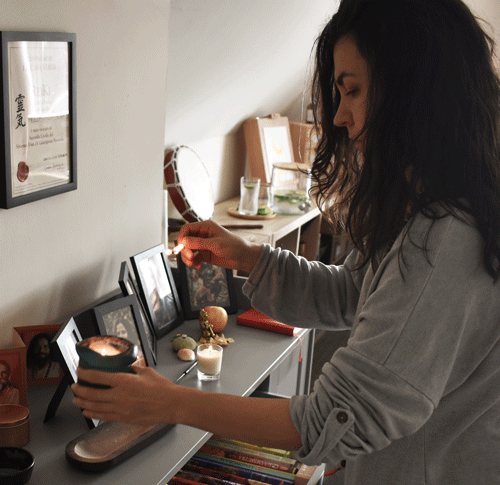
Healing meditations go beyond traditional mindfulness, combining guided visualizations, energy work, and intentional practices to help release limiting patterns, emotional blocks, and repetitive behaviors. These meditations can support:
Emotional healing and release of attachments.
Transformation of habits or behaviors through a process of “consciousness reprogramming.” (Shults, 2024)
Cutting energetic cords and clearing past influences.
Amplifying intuition, clarity, and personal empowerment.
I also offer personalized guided meditations created specifically for your needs. By contacting me, you can request a meditation tailored to your goals, whether for emotional healing, behavioral shifts, or energetic alignment.
If you’re unsure whether meditation is right for you, or simply want to see if my approach resonates with you, fill out this form to download a free 15-minute breath awareness meditation.